The American solar industry is booming, driven by increasing environmental awareness, supportive policies, and the desire for energy independence. But beneath the shiny surface of rapid growth, solar installers in the U.S. grapple with a complex web of challenges that can slow progress and squeeze profits. Let’s shed some light on the biggest hurdles these crucial players face in bringing clean energy to our homes and businesses.
1. The Permit Predicament: Navigating Bureaucracy
Imagine trying to build a house, but every city block has different rules for foundations, roofing, and plumbing. That’s a bit like what solar installers face with permitting. With over 20,000 distinct jurisdictions in the US, each often having its own unique set of requirements and processes, delays are rampant.
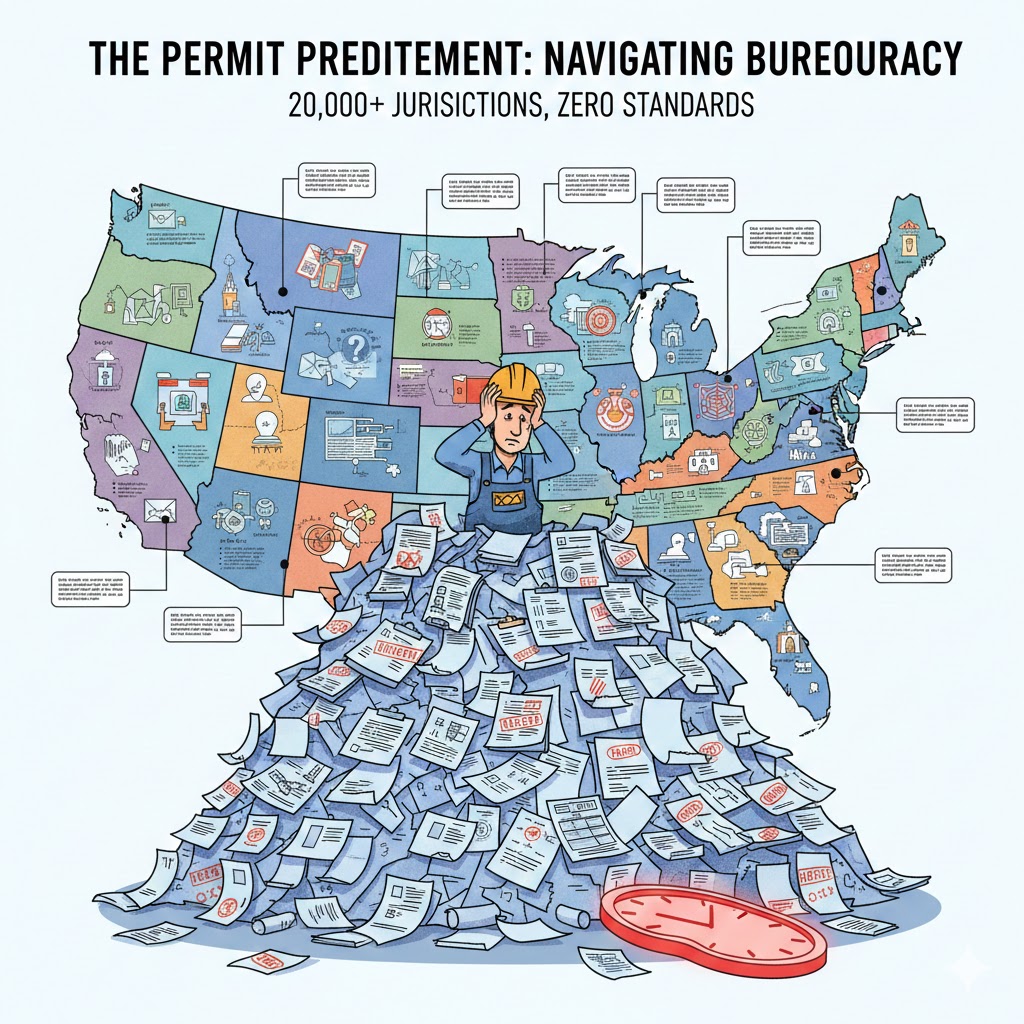
This “soft cost” of navigating permits, inspections, and utility interconnection can add weeks, sometimes months, to a project. Inconsistent interpretations of codes and ever-changing local regulations mean installers often spend more time on paperwork than on rooftops.
The process of connecting a solar system to the existing electrical grid can be lengthy, with utilities sometimes having their own complex application and approval processes. Changes in net metering policies (how solar owners are compensated for excess energy sent to the grid) can also impact the financial viability of projects.
Permitting and Inspection Delays: Solar installations often require multiple permits and approvals from various local authorities (Authorities Having Jurisdiction – AHJs), homeowners’ associations (HOAs), and utilities. Inconsistent requirements across the estimated 20,000 distinct jurisdictions can add weeks or months to the project timeline.
2. The Great Grid Gauntlet: Utility Interconnection
Once the panels are on the roof, they need to connect to the existing power grid. This process, known as interconnection, can be another significant bottleneck. Utilities have their own sets of complex requirements and approval timelines, which vary wildly from state to state and even utility to utility.
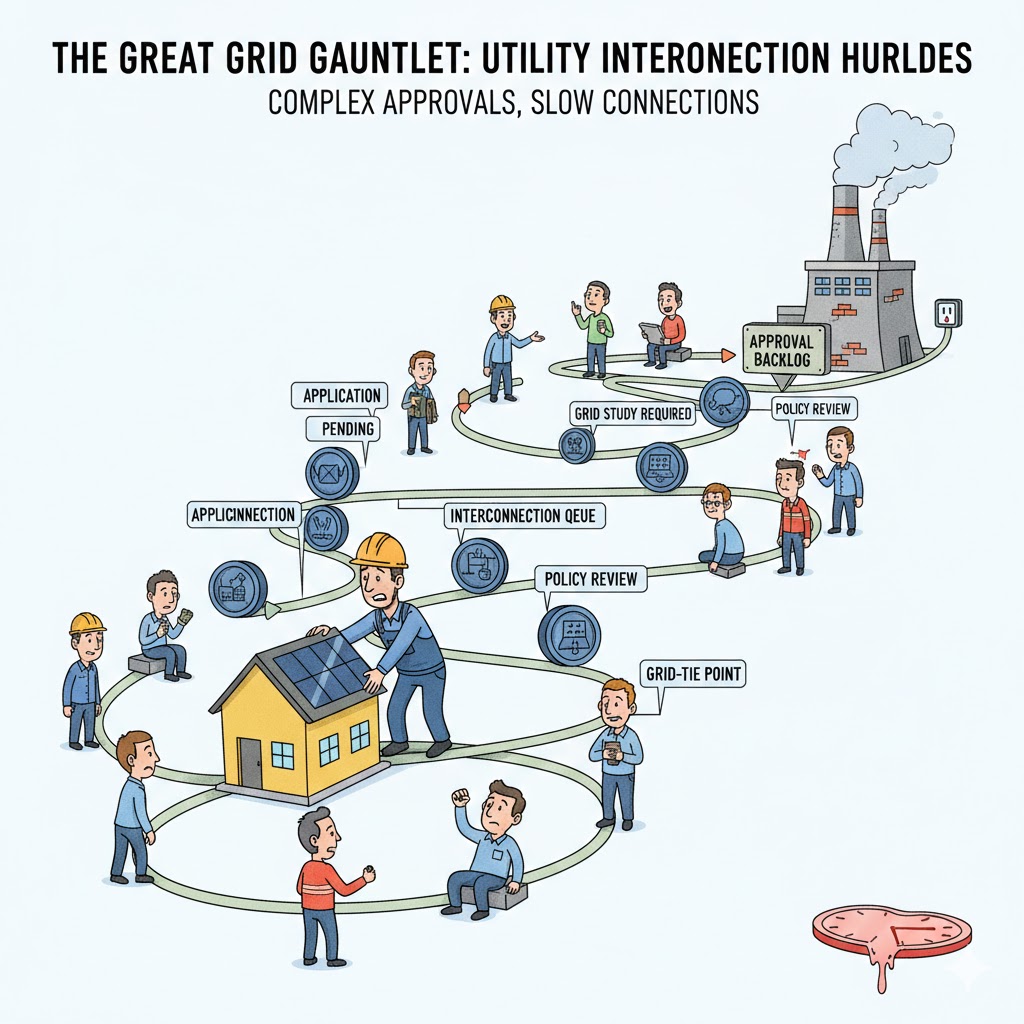
Furthermore, changes in net metering policies – how solar owners are compensated for the excess energy they feed back into the grid – can significantly impact the financial attractiveness of solar for homeowners, adding another layer of uncertainty for installers.
3. The Talent Shortage: Finding & Keeping Skilled Hands
As demand for solar energy accelerates, there is a persistent shortage of qualified workers, including certified solar installers, electricians, and project managers. This leads to increased labor costs, project delays, and a risk of costly on-site mistakes by less experienced crews.
The solar industry is growing fast, but the workforce isn’t always keeping pace. There’s a persistent shortage of skilled labor, from certified electricians specializing in solar to experienced installers and project managers.
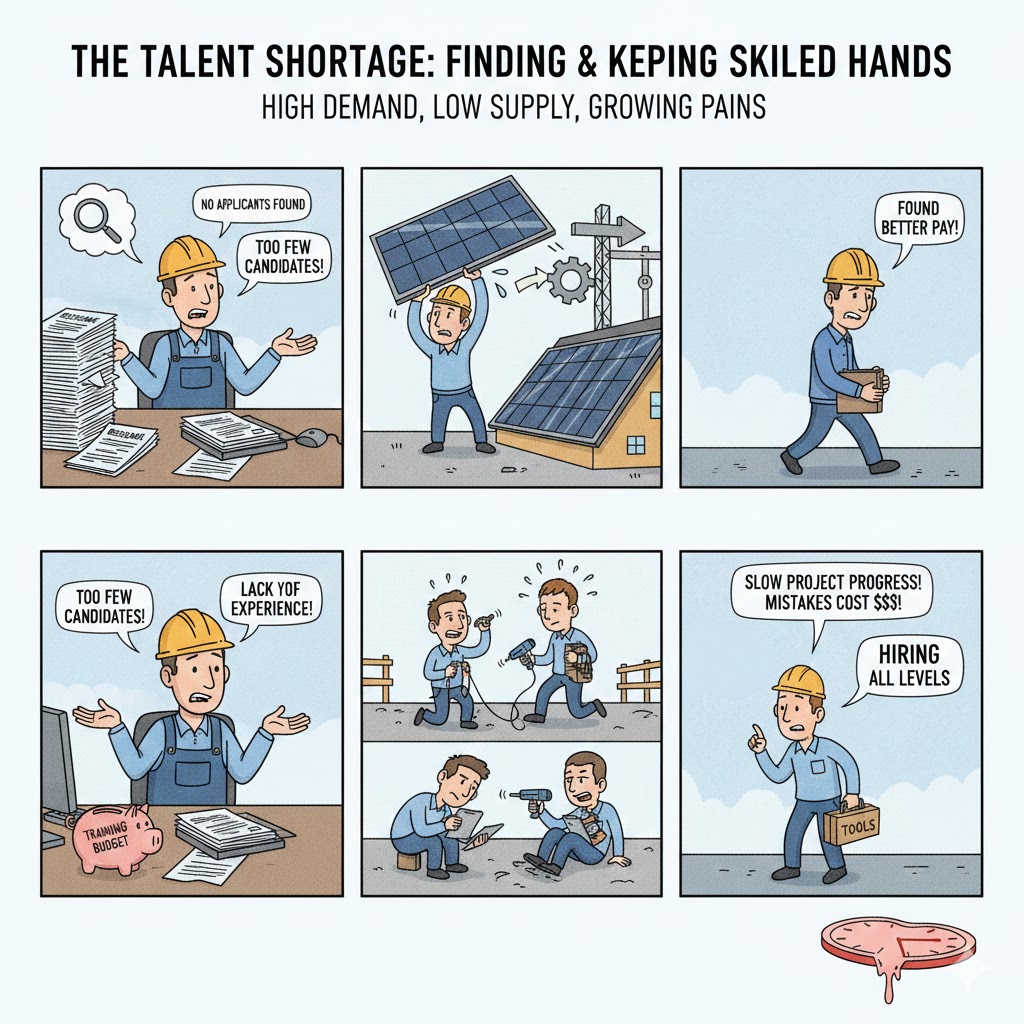
This scarcity drives up labor costs and can lead to project delays. It also means that newer, less experienced workers might be on the job, increasing the risk of costly errors if training isn’t robust.
4. Supply Chain Snarls: The Global Ripple Effect
Like many industries today, solar is deeply affected by global supply chains. Tariffs, trade disputes, and manufacturing disruptions, particularly for PV modules and inverters from overseas, can lead to:

-
Higher material costs: Directly impacting project profitability and customer pricing.
-
Project delays: Waiting for essential components can push back installation schedules, frustrating customers.
Developing more domestic manufacturing capacity is a long-term goal, but for now, installers must navigate this unpredictable global market.
5. Safety First: Risks on the Rooftop
Installing solar panels is a hands-on, physically demanding job that comes with inherent safety risks. Falls from roofs are a primary concern, alongside electrical hazards and injuries from lifting heavy equipment.
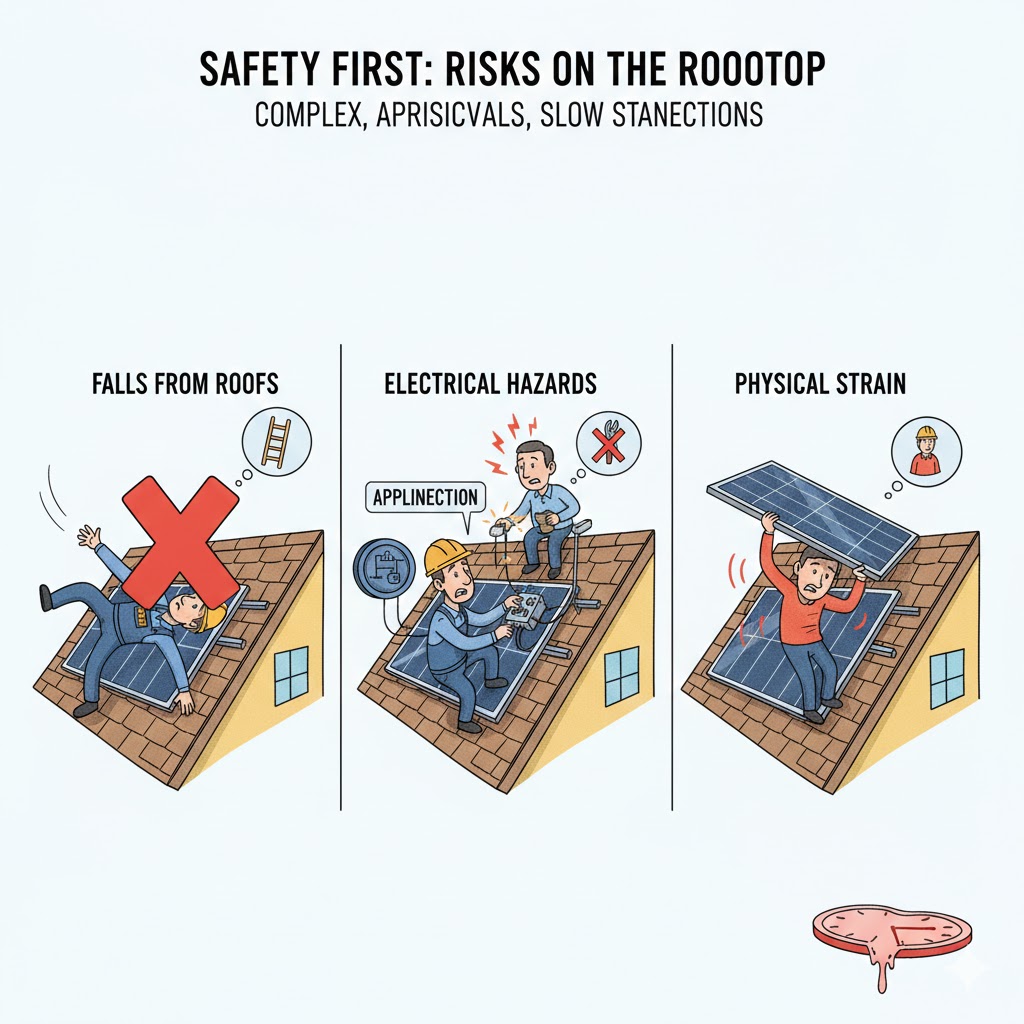
Installers must prioritize robust safety protocols, training, and equipment to protect their valuable workforce, adding to operational overhead but ensuring ethical and sustainable business practices.
The installation process itself carries risks and technical difficulties:
-
Workplace Safety: Solar installation is a construction trade with significant safety hazards, including:
-
Falls from roofs (a leading cause of injury).
-
Electrical hazards from high-voltage systems.
-
Strain and repetitive stress injuries from lifting heavy, awkward solar panels.
-
-
Inaccurate System Design: Failing to conduct thorough site assessments, accounting for shading, or correctly sizing the system for the customer’s needs can lead to suboptimal energy production and customer dissatisfaction.
-
Structural and Architectural Constraints: For residential and commercial installations, issues like insufficient roof load capacity, an aging roof that needs replacement, or limited rooftop space can complicate or delay a project.
6. Other Challenges:
-
Customer Acquisition and Sales: Installers often struggle with customer skepticism, the complexity of creating clear and compelling proposals, and managing leads effectively to convert them into sales.
-
Complex Financing Options: Navigating the various financing models—such as cash purchases, solar loans, and Power Purchase Agreements (PPAs)—and ensuring customers understand their options can be challenging.
-
Project Management Inefficiency: Coordinating installation teams, meeting deadlines, staying on budget, and organizing all necessary documentation can be overwhelming for growing companies, leading to customer frustration and reputational damage.
7. SolarAPP+: The Automated Permitting Solution
In this regard, SolarAPP+ (Solar Automated Permit Processing Plus) is a major, industry-backed solution specifically designed to tackle the biggest “soft cost” challenge faced by solar installers: the inconsistent and lengthy local permitting process.
SolarAPP+ is an online web portal developed by the National Renewable Energy Laboratory (NREL) with industry and code official partners. It’s designed to standardize and automate the plan review and permit issuance for eligible residential solar photovoltaic (PV) and solar-plus-storage systems.
It essentially replaces the manual, staff-intensive review process used by local governments (Authorities Having Jurisdiction – AHJs) with an instant, automated check.
How it Works for Installers:
-
System Data Entry: A licensed solar contractor registers and enters the system design specifications (e.g., panel details, inverter specifications, mounting details) into the SolarAPP+ portal.
-
Automated Compliance Check: SolarAPP+ runs an instant, automated check of the application data against model building, electrical, and fire codes that are customized to the local jurisdiction’s adopted codes (e.g., 2017 NEC, 2021 I-Codes).
-
Instant Permit Issuance:
-
If the design is code-compliant and within the eligibility limits (e.g., residential rooftop, not overly complex), the permit is issued instantly. The installer pays a small administrative fee.
-
If the design is not eligible or fails a compliance check, the system immediately notifies the installer so they can revise the design or submit it through the traditional manual process.
-
-
Inspection Checklist: Along with the permit, SolarAPP+ generates a specific inspection checklist for the AHJ’s inspector to use on-site. This standardizes the final check and helps reduce failed inspections.
Powering Through
Despite these significant challenges, the solar industry continues its impressive growth trajectory. Innovators are developing solutions like streamlined permitting software (e.g., SolarAPP+), advanced training programs, and improved supply chain logistics.
The path to a fully solar-powered future isn’t without its bumps, but the dedication of solar installers across the USA is steadily paving the way.